We Stand With Ukraine

The Phenomenal Journey of Ivan Zhao, Notion’s Founder

A coding genius, a visionary entrepreneur, and the co-founder of a groundbreaking $10 billion company, a great dog lover… Ladies and gentlemen, allow us to introduce you to Ivan Zhao.
But he’s not just any co-founder, he’s the brilliant mind behind Notion, a revolutionary workspace tool that many of us use every day, as Notion provides an all-in-one platform where we can seamlessly combine note-taking, project management, databases, and so much more.
According to data from 6sense, in 2023, over 69,695 companies have chosen Notion as their main management tool. Among its clientele are industry leaders such as Shopify, Yale University, Figma, Pixar, Amazon, Pinterest, Uber, Toyota, and other major players. And you might ask, how old is the CEO of Notion? Imagine being just 36 and already at the helm of a $10 billion company. Pretty cool, huh?
So, who is Ivan Zhao? How did he pave his path to success? And what’s the captivating story behind Notion’s creation? Join us for an inspiring journey through Ivan Zhao’s life, filled with a passion for design and software engineering, innovative ideas, and pursuing a dream.
Early life and passion for technology
Ivan Zhao is originally from China, his tech journey began in the vibrant cities of Philadelphia and Seattle, where he spent his early years and later continued to study in Providence. He graduated from the University of British Columbia with a degree in cognitive science, a subject that delves into how the human mind works.
But there’s more to Ivan than just computers and code. He has diverse interests, from avidly following basketball games to enjoying a good read in the bathtub (we’re guessing it’s the secret to his genius). He’s also known for starting his day with a steaming cup of coffee, a ritual many of us can relate to, especially on Monday mornings. Currently, Ivan lives in San Francisco, and by the way, as he is claiming on his own website: “If you happen to be in the area, feel free to reach out to me! I love to sit in coffee shops and talk about pastries ad naseum.”
Perhaps he’s discovered a secret blend of coffee and code that powers his success!
Ivan’s fascination with technology began at a young age, during elementary school. As a kid, he dabbled in modeling video games, igniting his passion for coding and setting the stage for future success. Later, he studied at college in Providence.
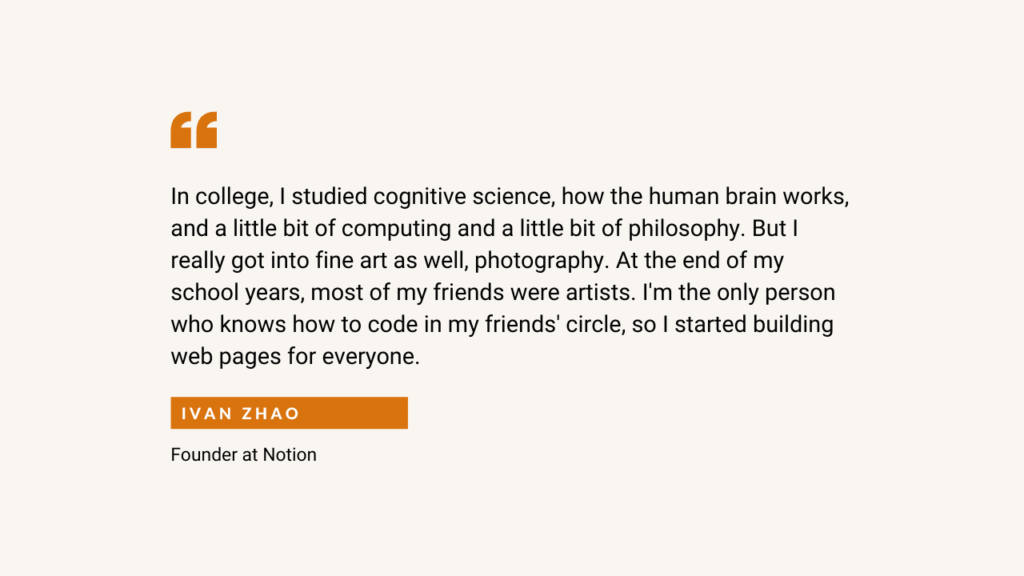
This eclectic mix of interests would eventually influence his approach to technology, making it both beautiful and functional.
But before the start of Notion, Ivan was busy gathering work experience. From being a design engineer to a designer at Reboot, a design Engineer at EQTY Labs, a software engineering intern at Blend Labs, a web engineer at Ask Iggy, to a software engineer at Intus Care, he had seen it all. One noteworthy stint was at Inkling, an education publishing startup. There, he explored the history of computing, which would become a crucial part of his philosophy when building Notion. By the way, what is Notion?
What is Notion?
Probably, there is no single company that doesn’t know what Notion is. Before, companies had to juggle multiple apps and platforms to manage their team’s projects, tasks, and knowledge base. But now, with the appearance of Notion, companies can streamline everything in one place. It’s easy to create project boards, assign tasks, and share essential documents, all within a single workspace.
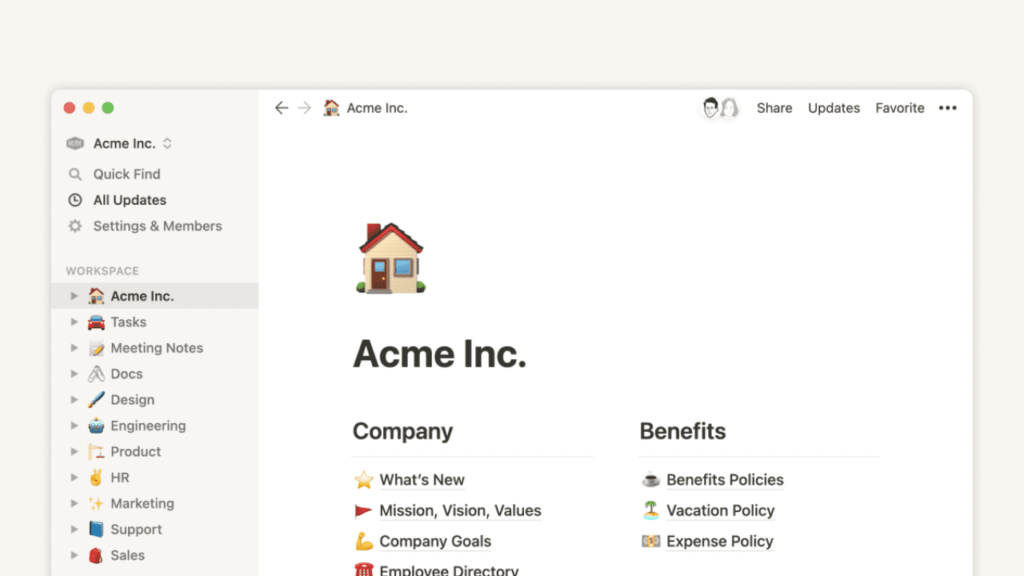
At its core, Notion is a versatile all-in-one workspace tool that provides individuals and teams with a single platform to organize thoughts, manage projects, and even run entire companies. It offers customization options, allowing users to create, edit, and rearrange pages easily.
Now, let’s take a closer look at who founded Notion? Who runs Notion? Why is Notion so popular?
The birth of Notion
As in the majority of success stories, Ivan Zhao found a solution to a significant problem of efficient and versatile digital organization that was out there. “I just got obsessed with the problem; let’s create a meta-tool, let every one programmer none program to create their own software so it gotta be so easy to use and so flexible so anybody can customize and create tools that work exactly the way they want.” shares Ivan Zhao.
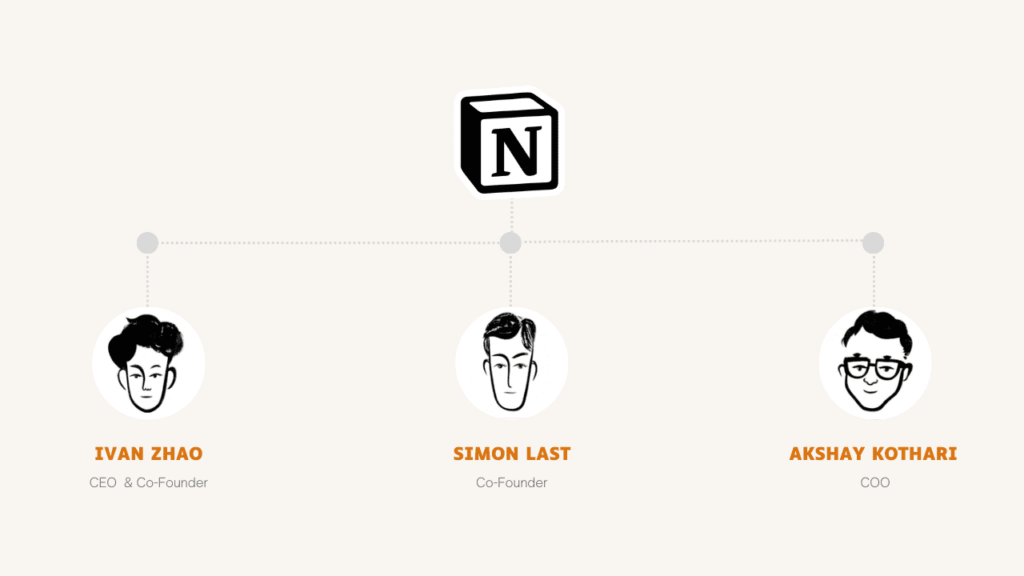
It’s worth noting that Simon Last and Akshay Kothari also played a crucial role in developing Notion alongside Ivan.
It all commenced in 2011 when Ivan Zhao came to live in San Francisco and posted a message on Hacker News that he was seeking a job as a designer. Akshay Kothari (the current COO of Notion) wanted to hire him as a designer for Pulse back at that time. But they didn’t happen to work together then. However, they kept in touch.
In 2013, Akshay sold his project Pulse to LinkedIn while Ivan and Simon were about to start Notion. Eventually, Notion became Akshay’s first investment.
Simon Last also contributed his expertise and dedication to the Notion’s success. Simon Last is a talented software engineer who worked at Nebula. Inc., and Space Telescope Science Institute before joining Nootion as a co-founder.
Turning challenges into opportunities
But challenges were looming on the horizon. People didn’t really want to build apps; they simply sought ready-made solutions.
“It took me several years to realize that people don’t want to build apps. Very few people want to do that.” shares Ivan Zhao about the initial idea of Notion.
In their journey, Ivan Zhao, Akshay Kothari, and Simon Last faced a big challenge. Initially, they wanted to create a platform for building apps, but most people didn’t want to build apps; they just wanted to do their jobs. Plus, the technology they used was unstable, making it hard to tell if the issues were their fault or the platform’s. And then, a powerful thought struck Ivan:
“It’s about whether you are building something for yourself or are you building something that the world wants. The first-version Notion is very much what you think the world wants, what you want.” adds Ivan Zhao.
So, Ivan Zhao and Simon Last had to rethink their approach. They realized that they needed to build something that people actually needed for their daily work, not just what they thought the world might want. Instead of focusing on making it a universal app-building tool, they shifted their focus to solving everyday problems. This change in direction was a turning point that led to Notion’s success. It taught them that true innovation often comes from solving real-world problems.
Notion 2.0
At that time, the team consisted of about 4 or 5 people. They were facing a financial challenge, and it became apparent that they might run out of funds. Regrettably, Ivan and Simon had to let go of their entire team. However, it didn’t stop them from pursuing their dream, and they started to search for a peaceful and conducive environment for coding Notion 2.0 without distractions, so they made an interesting choice – Japan. None of them had ever been to Japan, but they had always dreamt about it, plus, Japan offered a more budget-friendly option compared to San Francisco. Thus, from 2015 to 2018, the only things Ivan and Simon did were coding, eating noodles, and rebuilding Notion.
“We were just code, code, code. Then, ‘Hey, let’s go out for food.’ Then, we go eat, go back to work, and do it again.” shares Ivan.
In the summer of 2018, Ivan, looking for a COO to help scale Notion offered the position to Akshay Kothari, who was eager to dive back into building something new, and he joined the company as a COO when it was just 8 people strong. This strategic move paid off as Notion’s growth skyrocketed, going from 8 to nearly 500 employees in just 4 years.
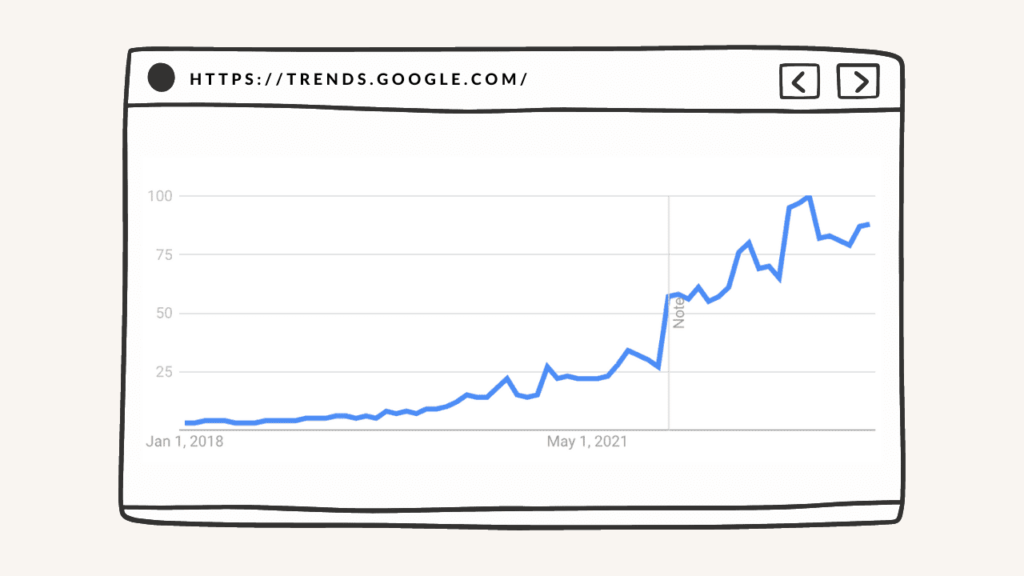
In 2019, Ivan Zhao reported that they achieved 1 million users; well, in 2023, Notion boasts over 30 million users. A pretty significant increase, huh? Moreover, Notion has around 4 million paying customers, distinguishing them from the broader user base. The company generates an estimated annual revenue of $67.2 million, showing a substantial 36% increase compared to the previous year. Notion collaborates with approximately 90 influencers, known as ‘Notion Ambassadors,’ each having at least 10k followers on social media.
Why is Notion so popular?
Notion is incredibly popular because it’s a versatile all-in-one workspace. It lets users easily organize, collaborate, and create in one spot. It has a user-friendly design and hundreds of useful tools. It’s extremely flexible for individuals and teams. Notion combines note-taking, document management, Wikis, project management, and databases, streamlining work and boosting productivity while providing access to the limitless power of AI right inside Notion.
There’s a free version available for individual users. For small groups looking to plan and get organized, there’s the “Plus” package, priced at $8 per user per month when billed annually. For businesses, the “Business” package is available at $15 per user per month. Additionally, for larger organizations requiring advanced controls and comprehensive support, there’s the “Enterprise” package designed to manage the entire organization effectively.
Bottom line
Ivan Zhao’s incredible journey is all about being really incredible at design. He’s great at mixing creativity with precise computer stuff, and that makes him an exceptional leader who can see the future and offer an excellent solution. Besides, Ivan possesses a strong character that never lets him to give up and helps him overcome certain problems. He’s not afraid of changing things, starting from scratch, and developing new ideas for a better outcome.
Notion is a product of a remarkable journey of expansion and success. The success of people who were passionate about innovations, creating a powerful solution, being able to change the direction of the course, and overcoming the obstacles.